

Upcomming / Current Exhibition
Upcomming / Current Exhibition

Masafumi Sanai ‘Raisha (Thunder Photography)’
There's something about these photographs that reminds me of Taro's.
Past Exhibition
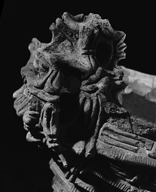
The Dignity of Life — Tarō Okamoto’s Jōmon
A fateful meeting in November 1951 resulted in Tarō Okamoto finding a ‘lifelong friend’. Five years after he had resumed his artistic activities in Japan following the war, he happened to visit Tokyo National Museum in Ueno where he encountered a pot dating from the Jōmon period (14,000–300 BC).
explore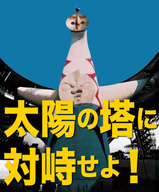
Confronting the Tower of the Sun!
Let’s make the most of this, the greatest roof in the world. That was what I thought as I looked at a model of the vast horizontal line created by this structure and I felt an overpowering impulse to smash through it. I wanted to challenge the graceful plain surface of the vast roof with something absurd.
explore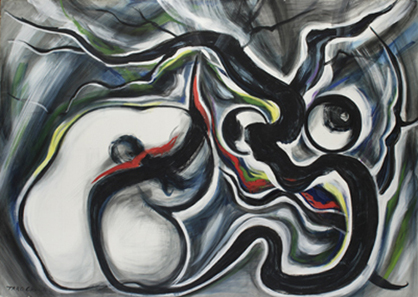
The ‘Trees’ of Taro Okamoto
Taro Okamoto felt a great affinity with ‘trees’. The sight of them reaching up to the heavens made him aware of the dynamism of life. He superimposed human ideals on the youthful spreading of their limbs and felt they represented a circuit through which people could commune with heaven.
explore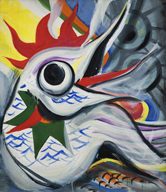
Taro Okamoto’s ‘Life Forms’
Overall, the ‘Tree of Life’ Forms a Single ‘Life Form’
When he was planning the ‘Tower of the Sun’, Taro decided to build the ‘Tree of Life’ within it.
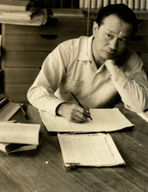
The‘Words’of Taro Okamoto
During the course of his life, Taro Okamoto published a huge number of books and other writings. It is probably true to say that there has never been another artist who devoted so much enthusiasm to words.
Traditions, culture, the Jomon period, Okinawa, Mexico, skiing, the subtleties of men and women.....
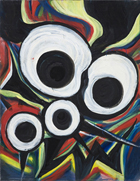
Taro Okamoto’s ‘Eyes’
‘The Face is the universe.Eyes are the holes through which existence and the universe unite.’
Taro Okamoto did not paint still lifes or Mt. Fuji.
What he depicted was ‘life’ itself.
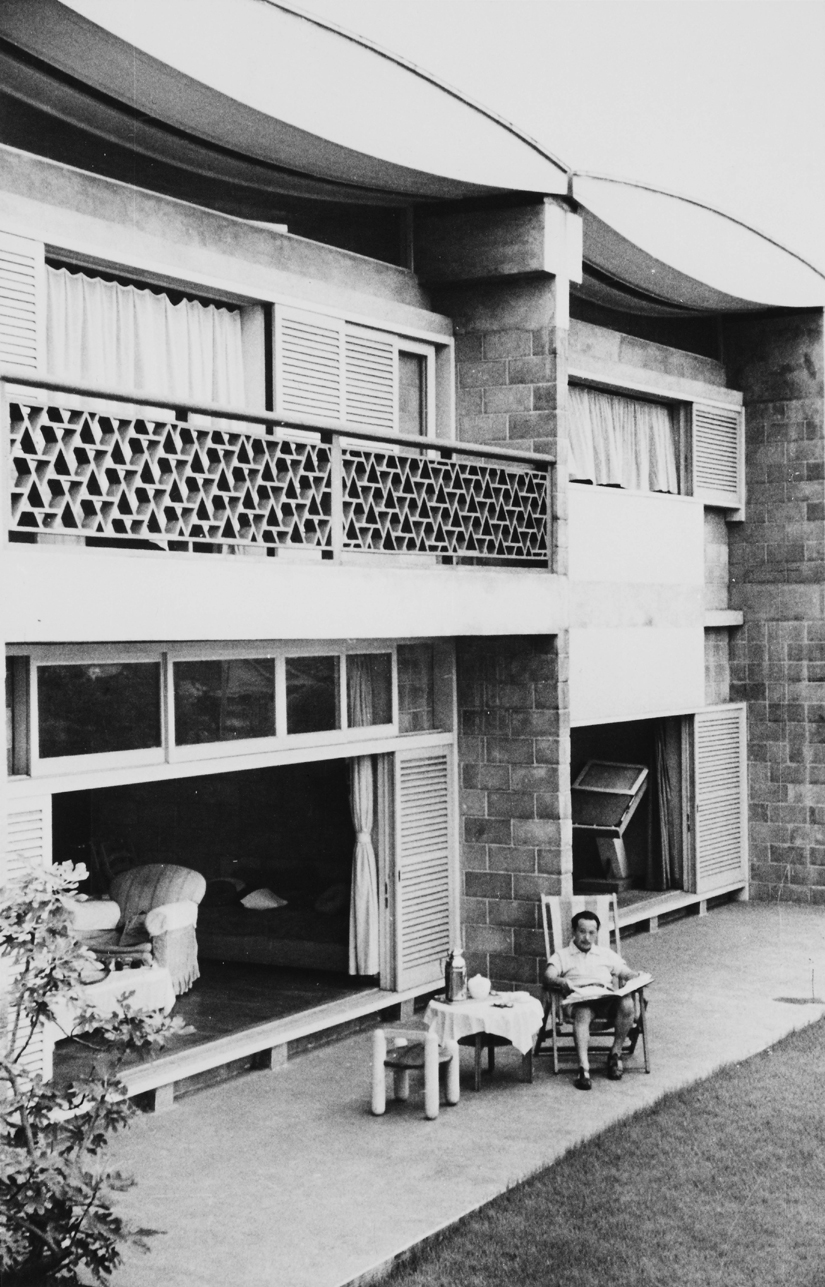
‘The Cradle of Creativity―Taro Okamoto’s Studio’
In 1954 Taro Okamoto finally realized his wish to open a studio on the site of the family home in Minami Aoyama where he had passed his childhood with his parents.
His objective was to create a base for a new art movement and so he named it the ‘Gendai Geijutsu Kenkyujo’ (Institute of Esthetic Research).
He tried to transmit the ‘spirit of 20th century art’ that he had experienced in Paris to Japan.
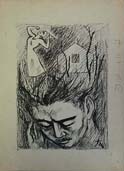
‘Kayo (Flower Sprites) ― Taro Okamoto’s Literary Illustrations’
When people hear the name Taro Okamoto, they tend to think of his large-scale works, such as the Tower of the Sun or Myth of Tomorrow, but in actual fact, he also produced numerous cover designs and illustrations for novels. This was particularly true of the years immediately following the Second World War when his work was used in a wide range of media, including books, newspapers and magazines.
explore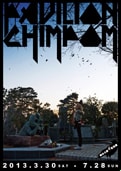
『P A V I L I O N』
We have never seen Taro or Toshiko,
In order to travel between these facts
We continue back and forth between
The house of memories and the scent of life
And the cemetery
Where death is buried like rubbish and put to rest.
